A current profile, not an old snapshot
What the report says goes into their profile, along with everything that has happened since.
Living Profile
What you observe, what the team knows, screenings, reports and the platforms the student uses, in a single profile that updates itself. Every decision starts from what the student needs now.
Start with what you already know · no prior diagnosis needed
A report, some answers, a screening. The profile organizes it and remembers it today, in March and next school year.
Drag the nodes
Benefits
What the report says goes into their profile, along with everything that has happened since.
You know where everything comes from.
Homeroom, every subject and counseling see the same profile.
The profile stays with the student, year after year.
Nubo works with an identifier. How we protect it
A few questions or a report are enough to create the first profile.
Create your first profileTheir whole context
Not just what you see in your class, but also what the rest of the team contributes and the tools your school already uses.
 Lucy · Grade 8BLiving Profile · updated today
When the school connects its platforms or a publisher's digital books, that activity also adds to the profile. The school decides what gets included.
How to start
There's no set order: start with any one and the profile fills in with the others.
A few questions about what you see in class, for the whole group at once.
Upload the report you already have. Nubo reads it and adds it to the profile, with the page it came from.
Display a code and the whole class takes the screening at once. It scores itself.
Import your classes from Google Classroom or connect the publisher's digital books.
Year after year
How it connects
The Living Profile guides every adaptation, every support plan and every training session, and all of them feed back into it.
Real cases
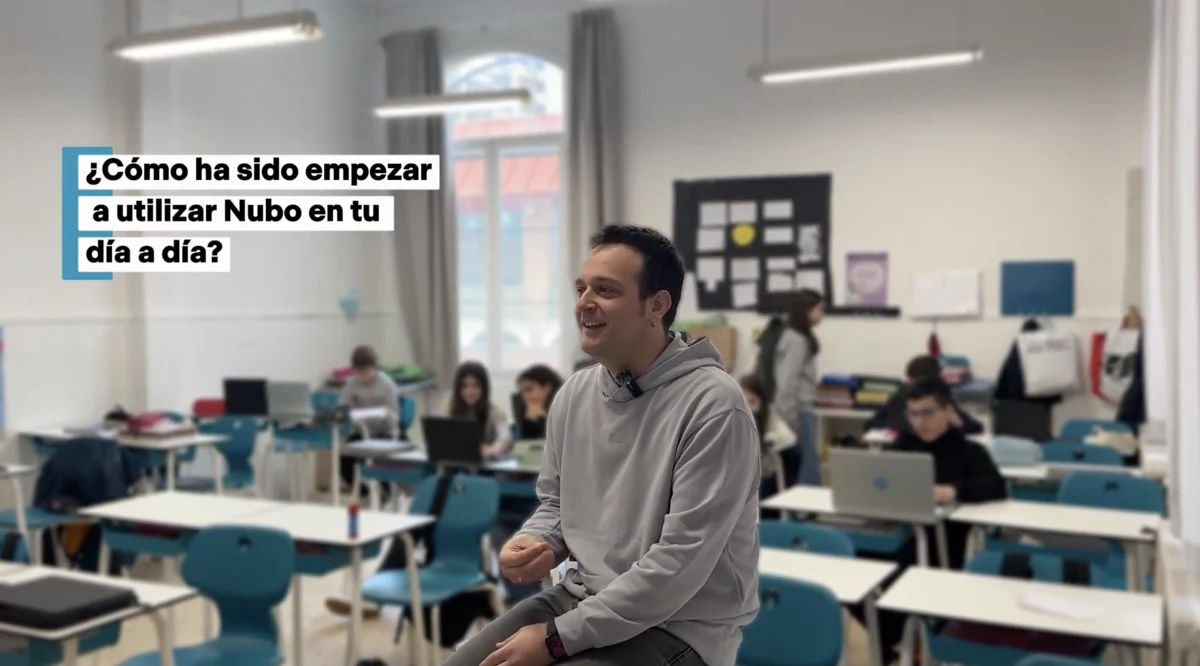 Watch the interview ↗
“You realize that the material you thought was good could be much better, and that it can be adapted much more closely to specific profiles.”
Joan · Assistant principal, counselor and language teacher · Maristes Montserrat, Lleida (Spain)
Read the full case →“My student no longer worries about whether he can do the task. He knows he can do what is put in front of him each day.”
Homeroom teacher · CEIP Justicia de Aragón (public elementary school), Alcorisa, Spain
Read their story →“What stayed with me most was the enthusiasm of the teachers when they came out of the training and said it was very practical and very concise.”
Ana · Director of the Alcorisa Teacher Training Center (Spain)
Read their story →The Nubo method
Seven principles guide every adaptation. These are the three you'll notice first in your classroom.
A label can point the way, but on its own it doesn't tell you what support a person needs.
The decision depends on the student's profile as much as on what today's activity demands.
Tell apart what students must learn from the difficulties created by the format of the task.
Frequently asked questions
No. You can start with what you observe in class through a brief FRIN. Reports, screenings and new observations enrich the profile as they become available.
No. It is a reviewable estimate of skills and barriers, built from evidence from different sources and from specific tasks. The professional decision always belongs to the team.
Today, Google Classroom (read-only) and the publishers your school links. You can see how they work under integrations.
The profile works with an identifier, not a name. The link between the two is kept in a separate, encrypted service. More under privacy and security.
Create the first profile with what you already know and see how your next adaptation changes.
Create your first profileFree to start · No prior diagnosis needed